
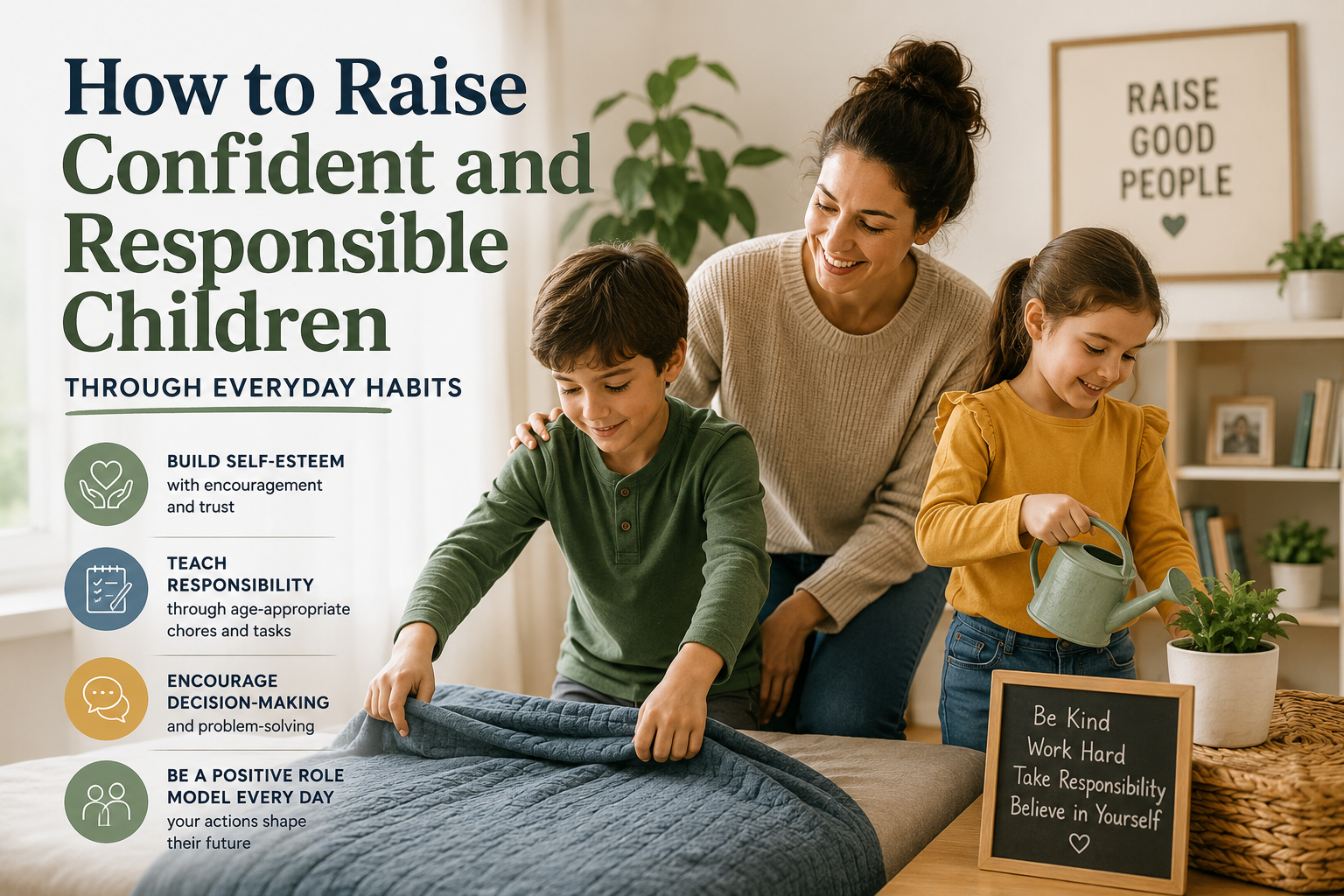
Every parent hopes to raise children who are confident in their abilities, responsible in their actions, and prepared to face life’s challenges. While there is no single formula for successful parenting, the habits children develop during their early years play a significant role in shaping their character. Confidence and responsibility are not qualities children are simply born with—they are learned over time through consistent guidance, encouragement, and everyday experiences.
The good news is that parents do not need expensive programs or complicated parenting strategies to help their children grow. Small, intentional habits practiced consistently can build self-esteem, encourage independence, and teach valuable life skills that last well into adulthood.
In this guide, we’ll explore practical everyday habits that help children become confident, responsible, and emotionally resilient while creating a supportive and positive family environment.
Why Confidence and Responsibility Matter
Confidence allows children to believe in their abilities, face challenges with courage, and recover from setbacks. Responsibility teaches them to make thoughtful decisions, keep commitments, and understand the impact of their actions.
When children develop these qualities, they are often better prepared to:
- Solve problems independently
- Build healthy friendships
- Make responsible decisions
- Handle disappointment constructively
- Adapt to new situations
- Develop resilience and perseverance
These life skills support success not only in school but also in future careers, relationships, and personal wellbeing.
Lead by Example
Children learn more from what parents do than from what they say. Every day, they observe how adults handle responsibilities, solve problems, communicate, and treat others.
Parents can model confidence and responsibility by:
- Keeping promises
- Admitting mistakes
- Managing emotions calmly
- Treating others with kindness and respect
- Showing perseverance during challenges
When children regularly witness positive behavior, they are more likely to adopt similar habits themselves.
Encourage Independence from an Early Age
Allowing children to complete age-appropriate tasks independently helps build both confidence and responsibility.
Simple responsibilities may include:
- Putting toys away
- Making their bed
- Packing a school bag
- Choosing clothes
- Feeding a pet
- Setting the dinner table
Although these tasks may take longer at first over here, allowing children to practice independently helps them develop important problem-solving skills.
Praise Effort Rather Than Perfection
Many parents naturally celebrate achievements, but focusing only on results can unintentionally create pressure.
Instead, praise the effort, persistence, and learning process.
For example:
Instead of saying:
“You’re so smart.”
Try saying:
“You worked really hard on that project.”
Recognizing effort encourages a growth mindset and teaches children that improvement comes through practice and determination.
Give Children Opportunities to Make Decisions
Confidence grows when children learn that their choices matter.
Offer age-appropriate decisions such as:
- Choosing between two outfits
- Selecting a bedtime story
- Helping plan family meals
- Picking weekend activities
- Organizing homework schedules
Making decisions teaches responsibility while helping children build confidence in their judgment.
Create Consistent Daily Routines
Predictable routines provide children with stability and security.
Helpful daily routines include:
- Morning preparation
- Homework time
- Family meals
- Reading before bed
- Household chores
- Bedtime schedules
Consistency helps children understand expectations while reducing stress and uncertainty.
Teach Responsibility Through Household Chores
Household responsibilities help children understand that every family member contributes to the home.
Age-appropriate chores might include:
Young Children
- Picking up toys
- Watering plants
- Putting dirty clothes in the laundry basket
School-Age Children
- Folding laundry
- Sweeping floors
- Loading the dishwasher
- Feeding pets
Teenagers
- Preparing simple meals
- Mowing the lawn
- Grocery shopping with supervision
- Managing personal schedules
Completing regular chores teaches accountability and teamwork.
Allow Natural Consequences
Parents naturally want to protect their children from disappointment. However, allowing safe, natural consequences helps children learn responsibility.
For example:
- Forgetting homework may mean explaining the situation to the teacher.
- Forgetting sports equipment may mean missing practice.
- Spending allowance quickly may require waiting until the next allowance.
These experiences teach valuable lessons without harsh punishment.
Encourage Problem-Solving
Instead of immediately solving every challenge, guide children through the thinking process.
Ask questions such as:
- What do you think you could do?
- What are your options?
- What might happen if you choose that solution?
- What did you learn from this experience?
This approach builds independence and critical thinking skills.
Build Emotional Confidence
Confidence is not only about achievements—it also involves understanding emotions.
Help children:
- Identify their feelings
- Express emotions respectfully
- Handle disappointment
- Celebrate successes
- Practice empathy
Children who understand their emotions often develop stronger self-awareness and healthier relationships.
Spend Quality Time Together
Children gain confidence when they know they are valued and loved.
Quality time doesn’t require elaborate activities.
Simple moments include:
- Reading books
- Playing games
- Going for walks
- Cooking together
- Talking during dinner
- Working on creative projects
These everyday experiences strengthen trust and emotional security.
Encourage Curiosity and Learning
Confident children are often encouraged to explore new ideas without fear of failure.
Support curiosity by:
- Answering questions patiently
- Visiting libraries
- Exploring nature
- Trying new hobbies
- Encouraging creativity
- Reading together regularly
Learning becomes more enjoyable when children feel safe asking questions.
Teach Respect and Kindness
Responsibility includes understanding how actions affect others.
Parents can encourage respectful behavior by teaching children to:
- Say please and thank you
- Listen when others speak
- Share fairly
- Help those in need
- Resolve conflicts peacefully
These habits contribute to positive relationships throughout life.
Limit Comparisons
Every child develops at their own pace.
Comparing siblings or classmates may reduce confidence and create unnecessary pressure.
Instead:
- Celebrate individual strengths.
- Recognize personal progress.
- Support unique interests.
- Encourage personal goals.
Children thrive when they feel accepted for who they are.
Create a Safe Environment for Mistakes
Mistakes are an important part of learning.
Rather than criticizing failures, help children reflect on what happened.
Ask questions like:
- What did you learn?
- What could you try differently next time?
- How can I support you?
This encourages resilience instead of fear.
Encourage Responsibility with Technology
Technology is a valuable tool, but children also benefit from learning healthy digital habits.
Teach responsible technology use by encouraging them to:
- Follow agreed screen-time limits
- Protect personal information
- Treat others respectfully online
- Balance screen time with physical activity
- Complete responsibilities before recreational device use
These habits help children develop self-discipline in today’s digital world.
Be Consistent with Expectations
Children feel more secure when expectations remain clear and consistent.
Consistency includes:
- Following through with reasonable consequences
- Keeping family rules simple
- Maintaining routines
- Applying expectations fairly
Clear expectations reduce confusion while helping children understand responsibility.
Celebrate Progress
Building confidence takes time.
Celebrate milestones such as:
- Learning a new skill
- Completing responsibilities independently
- Showing kindness
- Solving problems
- Demonstrating perseverance
Recognizing progress motivates children to continue growing.
Common Parenting Mistakes to Avoid
Even with the best intentions, some habits can unintentionally reduce confidence.
Try to avoid:
- Doing everything for your child
- Criticizing every mistake
- Comparing children with others
- Expecting perfection
- Overprotecting from every challenge
- Focusing only on achievements
Instead, encourage growth, learning, and resilience.
The Long-Term Benefits of Everyday Habits
Small daily habits may seem ordinary, but over time they shape a child’s character.
Children raised with consistent encouragement and responsibility often develop:
- Strong self-confidence
- Better decision-making skills
- Emotional resilience
- Healthy relationships
- Greater independence
- Improved communication
- Positive work habits
- Lifelong problem-solving abilities
These qualities prepare them for success in school, work, and personal relationships.
Final Thoughts
Raising confident and responsible children is not about expecting perfection or following a rigid parenting formula. It is built through consistent everyday habits that encourage independence, kindness, resilience, and accountability. By modeling positive behavior, praising effort, providing age-appropriate responsibilities, allowing children to learn from their experiences, and creating a supportive home environment, parents can help their children develop the confidence to face challenges and the responsibility to make thoughtful decisions.
Every family is different, and every child grows at their own pace. Focus on steady progress rather than immediate results, and remember that the small moments—helping with chores, sharing conversations, encouraging problem-solving, and celebrating effort—often have the greatest impact. Over time, these simple habits become the foundation for raising capable, compassionate, and confident individuals who are ready to navigate life with integrity and resilience.